If a magic mirror was placed in front of you and you could only choose to do ONE thing, what would it be? During the last two years of the pandemic, many people have asked themselves this question, many have acted on it and some remain in a state of reflection, thinking about what they could be doing versus being present in the moment and being the best they can be at any given time. Dreamers always dream and this question is for the dreamer in all of us.
For some, asking what that one thing is can be perceived as threatening, as it stirs up many subconscious thoughts of being deserving of what we want, of actually being happy and enjoying what we do, and of being recognized and rewarded for our good work. Those nasty sabotaging little voices in our head creep up and try to distract us the closer we get to doing what we are meant to do. Fear is an ugly animal and does its best work when confronted with doubt or insecurity - the opposite of confidence and belief in ourselves. When this happens, try this simple exercise and do what my mother taught me - smile, take a breath and sing your favorite song. Positivity and the belief in yourself will come back. I promise.
For others, the ultimate gift is the opportunity to choose to do what we love, what motivates us, what causes us to feel complete, and to actually do it..
There is no greater place to appreciate people who work at their best performance than entertainment, sport, and speakers. Actors and athletes, in whatever discipline, (dancers, skaters, skiers, singers, musicians, performers, etc.) who love and live for their passion are transcended into a special place, a space where time just is, when they perform. It is visible to those observing. There is a look on the faces, an emotional connection within that permeates the moment and transcends them into a different place. This past month, I was affixed to the television watching the Olympics, sharing the enjoyment and pain of the athletes’ performances. I also attended the theater and felt the same connection. Think about it, when do you lose yourself in something you love, and don't tell me it is when you are working on excel charts.
When I was searching for my career path many years ago, I prayed and visualized something that would combine my theater and business experience. The hospitality industry found me after a brief temporary work assignment that led to an unexpected introduction to attend a trade show that changed my life forever. I was fortunate to find a career that I loved, that gave me the opportunity to affect people's lives, to bring people together and that immersed me in time. It was the one thing I wanted to do. Doing your one thing does not mean that you must aspire to notoriety. Your one thing is what makes you happy, content, and fulfilled. The most effective and impactful people are the mothers and fathers who have influenced their children to become their “one thing”.
Scores of books, articles, poems, and therapy sessions have been written and spent on the age old questions, “Why am I here? What am I meant to do? How can I do my part and contribute to the world?” I’m reminded of a Dolly Parton quote, “Find out who you are, and then be that on purpose.”
There is an expression, "compare and despair." We often find ourselves looking at others and wondering what it would be like to be an actor, Olympic athlete, race car driver, gardener, astronomer, writer, musician, artist, or speaker. Does it come from admiration, emulation or envy? The "others" make what they do look like fun, easy, and effortless. We don't know what their personal lives are, but I can assure you that they have problems and challenges just like all of us. They just choose to do what they love and follow their life path with gratitude and faith.
Embracing your “one thing” takes courage and being selfish at times. Courage to ‘change the things you can’ requires identifying and admitting to yourself who you are first. Performers, celebrities, and business leaders have to be selfish. Selfish in the sense of having boundaries and not being distracted along the way to becoming and doing their “one thing”. These people know their one thing will not only help them to be richer and more fulfilled, but will cascade and help others too.
When I was studying Yoga, I vividly remember the teacher telling us that whatever 'absorbs' your attention to the point where no distractions enter, is yoga. For the man in my life, this is golf. When Michael practices and plays golf, he is in the moment; immersed, engaged, and hyper-focused on his game. It is this concentration that makes time fleeting because he is doing what he enjoys and not letting distractions get in the way.
To do your one thing takes:
What's the “one thing” you would love to do? What makes you happy? What uses every bit of your spirit, soul, and brain? When you find that, embrace it, seize it, and become it. And then, I can watch you be in your moment and share in your happiness.
Stop and take a moment to observe where you are and what you are focusing on. Is what you’re doing right now, today, or this week something that will affect, inspire or influence others? Are you creating something new or developing a process that will lead to a new industry or a specialty niche in your current industry? What if what you are doing was the piece carved out for you to put in place? Chances are that you wouldn't know that, which is why whatever we're doing at any given moment must be done as if it matters.
Had I known that the work I was doing, the people I was meeting, and the ideas that materialized were contributing to a new industry over 30 years ago, I probably would have stopped myself out of fear; that self-inflicted fear would most likely have paralyzed my actions, all because the focus would have been on me and what I would accomplish or personally gain; On a broader scale, this thought includes the group of people who became friends, colleagues, and contemporaries as we all worked together to create and develop the then-burgeoning meetings and events industry. We came together through all the new associations to get to know one another as we worked together for a common cause – a successful event. At the time, New York City was a candy store as we all embarked on our “firsts”, i.e. the first to have an event at FAO Schwarz, the first to have an event outside of a hotel ballroom, the first to use a new caterer, and so many other firsts that were explored and created.
After the final curtain call of Phantom of the Opera in New York, I recalled one of my first event escapades, a New York story about the early days of events and the beginning of a burgeoning industry focusing on “Meet the Cast” events. When Phantom opened in 1988, I had the opportunity to buy out the house for a client. Wanting to do something special for the client, I worked my way to the stage door one night and waited for that old black-painted door to open so I could work my way in to find the stage manager. After I explained that I was an event producer and wanted to donate to the theater for a Broadway-related charity (Broadway Cares did not exist), I met the Wig Mistress, who helped recruit 20 actors, including principals and the ensemble for an after-theater event at Sardi’s in NYC. What a special moment that I'll cherish forever. At the time, I knew it was special, but I didn’t think of the impact it made on the guests – and the cast – until Phantom closed and I dug out a signed program, bottle of rosé, and a cast sign-up sheet.
In the early days of events and meetings, we didn’t think about what we were doing; we just did it. Many of my peers, like me, did ‘firsts’ without thinking about it. We were all working together for the success of the meeting and event as we learned to work with one another, leaned on each other’s strengths and talents, and shared our enthusiasm through the associations we helped to build. Looking back, I realize we were all living in faith. That’s right, living in faith. There was no road map and most of us came from industries or disciplines like theater, music, entertainment, and teaching but we all carved out a place for what is now an intrinsic part of business – meetings, and events.
We may not realize the impact of our work at the time or understand where we fit into the big picture, but rest assured, you do. Whether you are in a leadership position or not, what we do contributes to the good of the whole. Yes, it is important to question your work and understand it, but many times just doing our jobs keeps the momentum going for our teams, companies, and clients.
We all do things we don’t want to, and I remind you that experts say when you don’t want to do something, do it first thing in the morning, but do it as the anxiety is greater than the task itself. We often put off doing things because we don’t have confidence in ourselves. We overthink; we create our fears and lack confidence. Sometimes we fear success, knowing that we can do whatever we put our minds to, but sabotage ourselves with inner, deep beliefs that we don’t deserve success and abundance, and in the process, paralyze ourselves from taking action. When you start to feel anxious or doubt yourself, ask yourself why you are in the position you are in. Remind yourself that others see things in you that you may not… that you’ve perhaps been too busy just doing and not thinking or overanalyzing your actions and that is good.
When we do things, serve others, and create experiences that will benefit people, we are whole. We are here to help one another and when we do it feels right. You know when things don’t feel right; you are uneasy, anxious, and doubtful. Use these signals to help you to stop and think. Question where you are, what you’re involved in, and if it is the right thing at any given time.
Perhaps when we choose to do our jobs, to contribute our best, to focus on the good of the whole, it will make life easier and we will be more content. I am not saying that you shouldn’t grow and challenge yourself in whatever role you are in. I am reminding you to not overthink things, to give what you are working on and who you are working for all you can as if it matters.
Because it does.
Here’s to the cast and crew at the Majestic Theater in New York. Long live the Theater of Events™!
In celebration of “Media Day,” I want to personally thank the entire global community of media, including the writers, editors, publishers, and salespeople who have all been working tirelessly, without knowing what tomorrow will bring.
Based on some light research, I discovered that today, November 2, is “Media Day” and I would like to especially include and celebrate the “Global Meetings and Events Industry” media community on this day. I would also be remiss to not mention my social media team as a part of that sentiment.
From A-Z because everyone deserves to be first, I personally want to recognize each of you with much gratitude and appreciation. (Please help with anyone I’ve unintentionally overlooked.)
Ashton, Barbara, Calum, Claire, David A., David B., David, Diane, Harvey, Laurel, Loren, Marin, Regina, Sabrina, and Sharon.
Media has proved that the pen is still mightier than the sword – even if the pen is a keyboard and the paper, a screen. I encourage you to really think about it. Since Covid struck in March 2020, the media industry has demonstrated and committed to adhering to their core mission – to deliver the news, to keep people aware, and continue making connections. We all owe them our recognition and thanks.
Some of the media invested money out of their own pockets to keep those black and white letters on a page. Others worked copious hours to share the latest and most accurate information when we were all in quicksand. Some continued to mail hard copies, while others switched to digital. Most did both. The headlines continued and the media music played just like the musicians did when the Titanic was sinking. They never gave up on the industry. They never gave up on their core belief to deliver news to their communities. They never gave up the ship and through continuous communication, commitment, and dedication kept us informed, engaged and educated.
Most importantly, they gave the advertiser and the reader hope. Hope is defined as, “a feeling of expectation and desire for a certain thing to happen.” Although we’ve had to deal hour by hour, and day by day, in terms of business decisions and next steps, the world remains hopeful in creating tomorrow.
And so, as you each read this and accept your unofficial “Recognition Award” for your own triple “P” -Perseverance, Passion and Persistence- know that there is a global community out there who awaits your message.
Spreading hope isn’t just a good thing – it’s the only thing.
THANK YOU! I hope the ink never dries.
There is a song from the Disney movie, Snow White, that goes, “Hi-ho, hi-ho, it’s off to work we go,” sung by the Seven Dwarves, including Sleepy, Happy, Sneezy, Dopey, Grumpy, Bashful and Doc. Which one can you admit to becoming over these past 19 months?
A lot of people are jumping the lines at the airport to get on a plane for business meetings, so why are there still so many people not returning to work or resisting what I call the “Big Return”? No doubt, we are adjusting to how the pandemic has and continues to shift our world and our thinking. Nomadic life has grown popular – after all, if we don’t know where we are going as humanity, why not pack up, go to different places, and experience new adventures? Futurists, like me, believe that people will return to offices and co-working spaces. It is just a matter of when and what form they will take. It takes the people to create, embody, and support a business’s culture and mission statement. We know that connecting with one another in-person produces key measurable results in the workplace, but the physical location and environment also affects performance and productivity.
It is up to you to define how work becomes your own “Field of Dreams”. Remember, you are always a part of a team. Each player has to do their part to keep the machine working. People like to work towards personal goals, including improving their lifestyle, living conditions, raising and educating their children, providing for their family, planning recreational time, and investing in their futures. Companies can’t succeed without putting their people first and people are motivated by pursuing their own personal goals before sharing a common goal within a company.
Just as much as the struggle prevailed to adjust to working at home, it will continue to how to get back to the office. Although companies and managers can be sensitive to individual circumstances, it is management’s responsibility to keep the company in business and that requires people to show up and work together face to face. They need to make prudent choices, establish guidelines and policies and respect employees’ situations with compassion and understanding. Your company has the responsibility to provide a strong infrastructure to manage, guide and maintain, while providing a safe and secure working environment. However, it is the employees’ responsibility to show up, do the work and choose to be proud of their contribution to the greater whole for the good of the company. Employees should understand the challenges, risks, and repercussions if they choose to not go back to work in the office. When I was asked to give some thought to the ubiquitous challenge facing Senior Management regarding labor, hybrid working situations, and getting employees back to the office, my first inclination was to revert to my experience in incentive and motivation. Establishing a recruit, retain, and reward program for employees could result in increased morale and encourage employees to revert to working in the office.
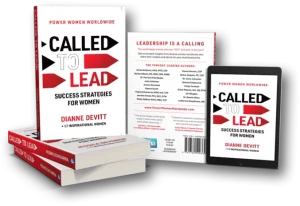
Psychologists will defend that it takes three weeks to change a habit. That is what working at home has become – a habit. It may be more difficult for some than others with children, elder care, and illnesses. From dress codes to happy hour, people have become individualized through separation. Consider a series of training programs, masterminds or group facilitations from professionals. I collaborated this year with 17 other women on a book targeted to help support women in business named “Called to Lead” and we work with companies and departments for professional development from the creative to mindful leadership aspect. Communication always starts at the top and although most franchises work independently, all share a unified culture. As people have changed, so have companies – but working has not changed. Employees play the most important role in the office, which is participating in their company’s community and culture. This situation is unarguably more productive than working remotely all of the time. The “Big Return” brings us an opportunity TO CHANGE THE CORPORATE CULTURE. What is the company’s core value? What does the company support? What is the mission of the company?
You want to feel welcomed and proud of your company. You want management to be competent and respectful of your time and abilities. You want to feel like you are cared for and a part of a team. Given this, there comes an opportunity to ask questions that can perhaps assist in the “Big Return”. Every company will have different circumstances related to specific needs, structure, management levels and business operation. The challenge of launching an effort with the objective to “return, reconnect and rebuild”, leads to the need for creative thinking and brainstorming. Sample questions may include “when was the last company survey?” or “is there data to prove that management is confident and competent with running the business?
Questions need to be asked and more research needs to be done on what exists internally and what sort of outreach was done during the pandemic. How has management been communicating with employees? One of the biggest concerns of management was the lack of connection with employees. Losing face to face opportunities devoids people of non-verbal communication. There is a poignant need to rebuild teams cascading from the top down.
I asked Ciara Feely, author of Steps to Win and an expert on sales and customer dynamics what her thoughts were on this topic. Ciara and I discussed how relationships are the key to achieving positive outcomes. Communication can be both simple and complex. It is hard to make communication simple. We all need human connections. Ciara offered the following:
Ciara shared that salespeople need to feel a sense of purpose and see a clear path for growth within the company. That doesn’t necessarily mean a promotion. Growth can mean advancing their skills or achieving personal goals. Growth is achieved by having an inspiring leader that they can learn from and grow with.
Do leaders know what their leadership style is and if it's attracting and retaining the talent they need?
She shared a story of Dan who was a top performer on the sales team. He decided to leave his position. Not because of the money. He left because the company’s mindset was too transactional.
There was no connection.
No Clear Vision.
No Purpose.
He also hadn’t spoken with his boss in 3 weeks.
Prepare for the Big Return
Define clear policies of what is expected from your employees. Maybe that is a proof of vaccination requirement for all employees by a designated date, or a three day “in the office” minimum immediately (unless extenuating circumstances excused by management.) As time goes on, it could change to four days in the office, and so on.
It is management’s responsibility to keep the business operationally solvent and report to the Board, franchise owners, and employees. People need strong leadership to help them during this period of indecision. While there are many exceptions, there is only one rule – and that rule is that people need to return to work. However, it is the company’s concern to provide a safe and secure environment for employees when they are in a physical office environment.
Communication is Key
The number one requirement to keep a company moving forward together is communication from senior management. Employees need consistency, commitment, and cohesiveness to keep them connected. In times of uncertainty, they need even more communication – not less. You may consider launching a communication plan from management – be authentic, forge a human connection, instill a sense of urgency to get back to business. There are many ways to do this such as conducting an employee survey, having weekly updates or PSA’s, or interviewing senior management employees on the news of the week, featuring and recognizing key employees. You could even create a vehicle for anonymous questions and comments, or form an internal campaign to encourage connections amongst workers globally. Create opportunities to involve employees’ ideas for new initiatives to return to the workplace.
Keeping your employees feeling heard is all a part of that communication. Create opportunities to involve employees’ ideas for new initiatives to return to the workplace. Recognize and accept the diverse feelings people have about returning to work. Don’t be afraid to speak about it or offer coaching. Facilitate management training programs and educate them on the statistics of returning to work in-person, such as loyalty, productivity, innovation, team building.
Forward thinking and considering, or even implementing employee led initiatives and ideas open gateways to communication, growth, and innovation. For those who understand the intrinsic value of incentive and motivation programs, returning to work is akin to an incentive program. Senior management should give employees attention with the focus of working together again for the success and good of the company. Money is not the key motivator to employee retention – recognition and communication is.
What I know for sure is that rebuilding our society, our cities, our economy relies on people coming together again. Local economies depend on businesses to sustain themselves. People need people. Over 80% of communication is non-verbal. It is sensed by being in someone’s physical presence, and when we are in person with one another, dynamics and interactions are accelerated.
Whatever your situation, mapping out a direction of return for all employees and developing a collaborative culture of creativity is the beginning to defining what is next to come. I believe that what’s next will be your best chapter yet!
The Dimensions of Loss and Where We Go From Here
No one can speak about loss unless they’ve experienced it. How could they? I am writing this article on the six-month anniversary of my mother’s passing, and I feel that loss. Period. But at the same time, I also feel reborn from the experience, as losing my mother was a clear sign to me that it was time to live my life, and time to move on.
Climbing to the top of the Maslow Hierarchy of Needs to be a whole person requires us to experience life with its good or bad, ups and downs, losses and gains. When we conquer these obstacles, we become our true selves, our creative selves, our whole selves. There is no great epic story told that doesn’t include challenges and overcoming loss, but no one can tell us how it happens to us.
Loss is a personal feeling
I know that the way in which I feel is not the way in which you feel. Feelings are non-judgmental, and no one has the right to tell you how to feel or how to react to loss. I know quite well that all of you reading this article have already correlated losses in your life just upon seeing the very word itself. Frankly put, unless you’ve been under a rock, the entire world has been held together by loss during the pandemic.
During this time, we have collectively lost much as a society, as a world, and as a people - and we will never forget this time. Like 9/11 is stamped in my mind forever, so will this time be in our collective consciousness. We will all be able to answer questions like Where were You? What did you do during the pandemic? Who or what did you lose? We share our pathos over the heart-wrenching pain that loss of a loved one brings. We empathize with people who have lost their businesses, their jobs, and their identities. In my business life, I perceived the advent and growth of communities, of masterminds, of people coming together to support one another as many are adapting and seeking a new sense of direction having lost their former identities, roles, and career paths. To some, this has been a time to reboot, redecorate, and recalculate. But how does this relate to loss? Loss gives us the permission we require to move forward to explore something new.
Loss of human interaction was experienced on a global degree
We all felt it as we cocooned in our homes, apartments, rooms, igloos, tents, and more. The good news is this: we’re working our way back and re-entering society. We connect as people and those who choose to move on and create new identities through advanced education, marriage, moving, exploring, and learning are different. Those individuals who kept an eye on the rearview mirror are sadly, well, still seeking and grieving. Loss of identity, losing a job or a partner, redefines you and that ‘label’ is your ticket with how to process the change. I clearly remember being downsized twice in my life – and it was devastating. How would I introduce myself when I was used to “Hi, I’m Dianne from XYZ Company.” Instantaneously, I was simply Dianne. This loss gave me the opportunity to look in the mirror and challenge the confidence in myself. Was I enough? Was being me sufficient? Did I need a company – or partner – or association to identify the uniqueness that lies in each of us?
Loss has a purpose for all of us
Simply put, without loss, we would not recognize or appreciate what we have. Loss helps us cultivate a sense of gratitude. Over the years, I’ve lost at receiving awards, winning games, and being promoted. I’ve also lost the opportunity to have children, lost my business, and lost over $2 million dollars. It didn’t occur to me until someone pointed it out, that as a Professor, I have over 10 children come into my life every semester. This brings up an important point about the experience of loss. When a loss is replaced by something, it changes it’s meaning. It becomes a significant part of personal growth, a step to move forward on the journey. It becomes a part of letting go which is fundamental to development and growth. We can’t see this when experiencing the loss, but in hindsight, there are always a sequence of events to connect that tell the story, our story, that was meant to be. What I now know is that without the losses in my life, I wouldn’t have become the person I am today with the sensitivities, compassion, and empathy for others that only pain and personal angst can bring.
Many losses I experienced instilled in me a sense of determination to live as fully as possible allowing my pain to push my creativity and my productivity. Loss is the ingredient for non-verbal expression. The greatest inventions, prose, and artwork have sometimes arisen out of the depth of grief and pain. Loss seeks expression in whatever form works best for you, i.e. writing, art, dance, sport, music, volunteer work and more.
On a metaphysical level, if we don’t lose things, we don’t have a choice to find something new and grow. This is easier said than done as any loss I’ve encountered didn’t come with a roadmap to heal and the process certainly isn’t linear. One of my favorite old movies is “Oh,God!” with George Burns. In it, he states, “…you can’t know joy without pain, you can’t know good without evil,” and I’ll add, you can’t know what you have without loss.
Loss drives us to do two things: to give up or get up
In giving up, we stop living; we block our development and our ability to think and use our creative mind to visualize what our next steps could be to form ‘what’s next.’ We give up and we give in. If we ‘throw in the towel’ and choose to stay in that dark place, we miss the bridge time between loss and finding or making a new discovery about ourselves. Don’t get me wrong, depending on the loss, we all need time to process and absorb the change that loss brings but processing is different from being defeated. I will not be defeated by loss anymore.
To me, there are different types of losses:
Loss finds physical places to hide in our bodies that affect our health
I learned in yoga to observe postures of students and people and to ‘read’ certain areas of concern. For example, many people who are no longer with someone they deeply care about tend to protect their heart by involuntarily moving their shoulders inward. When we ‘speak from our heart,’ we expand our chest, open ourselves up and our shoulders fall back into place. Some hold the pain of loss in their digestive tracts, others aren’t grounded because the pain literally pulled the rug out from under. Loss can weigh heavily on our bodies which is why exercise, yoga, walking and anything physical is part of a healing process.
In the amount of time it takes to pull a finger out of a glass of water, that is the time it takes for most humans to reconnect in person. In our sensory lives, over 11 million sensory synapses occur per second so when you do encounter someone after two years, reach out and touch them, hold them, hug them and feel the joy associated with contact, and hug yourself in between.
We have all lost something or someone in our lives at one time or another and this time we are in that exemplifies the universal shift we are experiencing. A new age is born and with any birth, there is pain making way for life. With all the loss around us, have you recognized what is being let go to make way? Do you give yourself time to process it? To recognize and honor it? To put the loss in a place? To learn from it? There is a saying, “Let Go and let God.” Loss and confusion are bridges from where we were to where we are going and the faith and fortitude to move on are our transportation.
Following the financial crash of 2008, I was speaking at a conference about Understanding Your Personal Value. I asked everyone to hold up a one-dollar bill with two hands and on the count of three, rip it. Aghast, shocked, stunned, and clenching their stomach muscles, the faces of the people in the room reacted simultaneously. I asked, if this is the response to a one-dollar bill, what is going on internally when you lose so much more perceived value?
Loss needs to be recognized
I live in Chicago and realized I can’t visit the NJ cemetery to acknowledge my parents. I ordered a simple plaque for the garden and now have a place to recognize them. Something about a symbol, object or name written down makes the loss real. Many people chose charities and causes for donations in someone’s honor – whatever it is, make it real.
Marcel Proust said, “The real voyage of discovery consists not in seeking new lands but seeing with new eyes.” If we are not forced or pushed to discover new lands, how would we know they even existed?
So, is the concept of loss and the grief associated with it the real issue or is it the fear of change? Is it the fear of being a better version of ourselves? Is it fear of success and of growth? Is it fear of leaving behind what is familiar? Fear and change can be paralyzing to some. Loss demands change whether we like it or not. Loss is a catalyst that, like a two-year old having a tantrum, says, “pay attention to me.” Loss gives us an opportunity to find new things, to manifest our creative selves, to be, go and do – and that requires courage, faith and love.
And so, whatever your loss and losses, honor them, recognize them, learn from them while you move ahead trusting that there is something waiting for you that is bigger and better than you can imagine. And, take down that rear view mirror so it doesn’t get in the way.
I’ve been through many changes in my life and I’ve found that accepting them, understanding them, and moving ahead to adapt to the changes – in my own time – has helped me to take advantage of the new opportunities that come with change.
What have you found through loss?
Planning meetings and events have always been stressful undertakings, but in the COVID era, this responsibility has been amplified to a new level – that of taking an enormous risk to bring people together, and when.
This era is a time of extremes, and with extremes, security and safety concerns increase and become even more complicated. We’re often faced with questions that we can’t answer. It’s as if we’re putting together a puzzle but missing an enormous amount of pieces. We work to continue to search for the piece we need, while simultaneously attempting to give our full focus to the puzzle as a whole.
In regards to our businesses, the biggest missing puzzle piece - and the most serious risk we can take - is being complacent and not being informed of risk management.
Risk management is a broad field – legal, professional, personal, preparation and preparedness. It involves strong analysis and in-depth assessment of what could occur and what results and precautions could be in place to mitigate a situation. In addition, creating an effective risk management plan requires input from a number of sources:

To answer all these questions and more, and with help of legal experts Jonathan Howe, Terri Wooden (VP of Marketing and Global Meeting Services) and others, we’ll address the things participants wish to learn and present the most up-to-date information available in my new virtual conference, “Risk Management: Assessment, Procedures, and Protocol” happening this Tuesday, June 2.
Like all of us, I know there is never too much to learn or too little to overlook.
Take a risk, and I look forward to seeing you there.
Dianne
Holy Shift!
For many of us, working from home has been integrated into our work life for many years but for most of us the shift happened suddenly and we found a corner, table, room or space to work from adjusting to family life around us, trying to be productive.
Please join us on Tuesday, May 5, while we present “Home Office Strategies: Optimize Your Personal and Business Performance” from 12 noon to 3:30PM ET. (link) During this transition, you have an obligation to yourself to understand your own personal and professional needs to function at your best to manage and keep up with the amount of information overloading our brains daily.
Corey Anker, Certified Life Coach, will share some tips on how to propel our performance from the inside out. Working at home has its advantages, but there is a distinction from working at home and being at home working.
Creating an environment that has balance supports working and productivity. Designing the space, setting up technology efficiently, and being sensitive to your physical and ergonomic needs is critical for your health and well-being. Our experts, Jeffrey Simon, Architect and Debra Duneier, Architect and Feng Shui expert will share valuable tips and information on how to increase our awareness and maximize your physical space. Sit up straight will have a new meaning after expert Karen Lunda shares her perspective on ergonomics.
We have become overnight media personalities and clearly need tips and advice to cultivate an impactful impression. Sabrina Shore will help us navigate this new reality to build a successful digital identity. Staying calm while the pressure is on is Dr. Sharon Melnick’s secret – you will learn a simple technique that will change your life – guaranteed.
And, above all, we can’t be on line in the wild frontier without knowing how – without understanding best internet practices at home and how to protect them.
THERE is a host of information here - available on demand for the week that follows to all who participate.
Office Yoga – YES! A very special closure to our conference will be experiencing an Office Yoga session with the man who wrote the book, Darrin Zeer.
Looking forward to seeing you there – at the desk, or on your mat.
REGISTER TODAY!
Working for the common good is the one thing we are all sharing right now whether in Italy, Illinois or Indonesia. “We” replaces you or I.
With this collective conscience in most people’s minds, I am reminded of the value of industry associations and the sense of community they offer. The very definition of association according to the dictionary is “a group of people organized for a joint purpose” or “a connection or cooperative link between people or organizations.” During my career, I’ve automatically joined related industry associations with the attitude that you get out of something that you put into it. Through these, involvement grew in committees and service in various board positions.
In the MICE industry, meetings, incentives, conferences, exhibitions, there is a governing body called the Event Industry Council www.eic.org The EIC is the umbrella organization for over 30 associations, all who serve the professionals who make meetings happen from hotels, DMCS, event producers, venues, caterers, planners, and all related services for those who plan, produce and organize professional gatherings. Some of these are ILEA (International Live Events Association), MPI (Meeting Professionals International), IACC (International Association of Conference Centers), PCMA (Professional Conference Management Association), NACE (National Association of Catering Executives), ASAE (American Association of Association Executives), FICP (Financial Insurance Conference Planners), ADME (Association of Destination Management Executives). They work on behalf of the industry and are related to the bigger picture of tourism and travel www.USTA.org
The collective power of these organizations is in the numbers. Membership relies on the association to represent them, and in the current environment in the meetings, events, tourism, travel industry, government has been and will continue to be made aware of the industry through its executive management in the associations.
In every industry sector, there is a specialized association or entity that brings together its members and experts to share information – for any special interest. In real estate, RealComm www.realcomm.com is one of the leading event companies focusing on the real estate and technology marketing. In retail, the National Retail Federationwww.nrf.com, and fashion, Fashion Group International www.fgi.org.
I encourage you today to research the associations and companies that focus on bringing people together because when this pandemic is over, WE will all need to come together and move forward. Because I know that #ForwardMatters tm.
The science of body language is clear: experts know that how you sit, stand and gesture tells others what you are feeling. But did it ever occur to you that how you sit, stand, and gesture might also affect how productive you are at work?
Loosen UP! The next time you are struggling for a creative thought, take inventory of your body. When your body is tight, your mind and the flow of thoughts is likely tight as well. From a physical viewpoint, when your body is contracted from fear or anticipation, there is a reduction of blood flow and oxygen. When this occurs, your brain does not get the food it needs to function and therefore your thought processes are affected. Your ability to think freely in a non-judgmental way is impeded. So, what can you do? You can loosen up so that the wiring in your brain loosens up too and the flow of energy increases.

As a creative thinker, how are you sitting? Standing? Are your shoulders so tight they are touching your ears? Are you breathing deeply, or even significantly? Is your jaw clenched? Is your mouth relaxed? Are you making a fist? Twitching? If so, follow the rules of Arthur Joseph, creator of Vocal Awareness, and relax your tongue, teeth, and jaw. Just try it! You’ll be surprised how your entire mouth feels different and your head feels lighter.
The next time you are at a loss for an idea, get up, shake it out, and reach out. Keep your body in check and your thoughts will be strong. Once you start taking control of your body’s tensions, who knows what ideas will flow!
Dianne Devitt
The story of your life – who your parents are, where you were born, the people who surround you, your shape, build, color, personality, perception, understanding, style, character, talents, abilities, sensory development, insight, and so much more – are unique only to you. The only one of you.

How you think creatively is unique to you. It takes courage to trust your inner voice, especially when seeing something others don’t see, and to speak out with what you see. It doesn’t make you the ‘black swan’ or outcast. Rather, this spark sets you apart as a discoverer, an adventurer, someone who allows themselves to look at things differently. We are each a page in the story of the universe for one another to learn from, to grow from, to be inspired by. How your page will be written and told is being formatted right now, as you read this. If you were reading your own page, what would it say about your story?
Dianne Devitt